
Company
From a CERN spin-off in Geneva to a product-driven MedTech company, Terapet develops next-generation imaging solutions that connect treatment planning with in vivo verification in radiation therapy and nuclear medicine.
From high-energy physics to clinical practice
Terapet SA was founded in 2019 in Geneva, Switzerland, as a CERN spin-off with the ambition to bring advanced detector technologies from high-energy physics into clinical practice.
Built on a novel gamma-ray detection platform, Terapet develops next-generation imaging solutions designed to bridge the gap between treatment planning and in vivo verification. From the beginning, the company has focused on translating complex physics into clinically deployable systems that improve confidence, accuracy, and decision-making in radiation therapy and nuclear medicine.
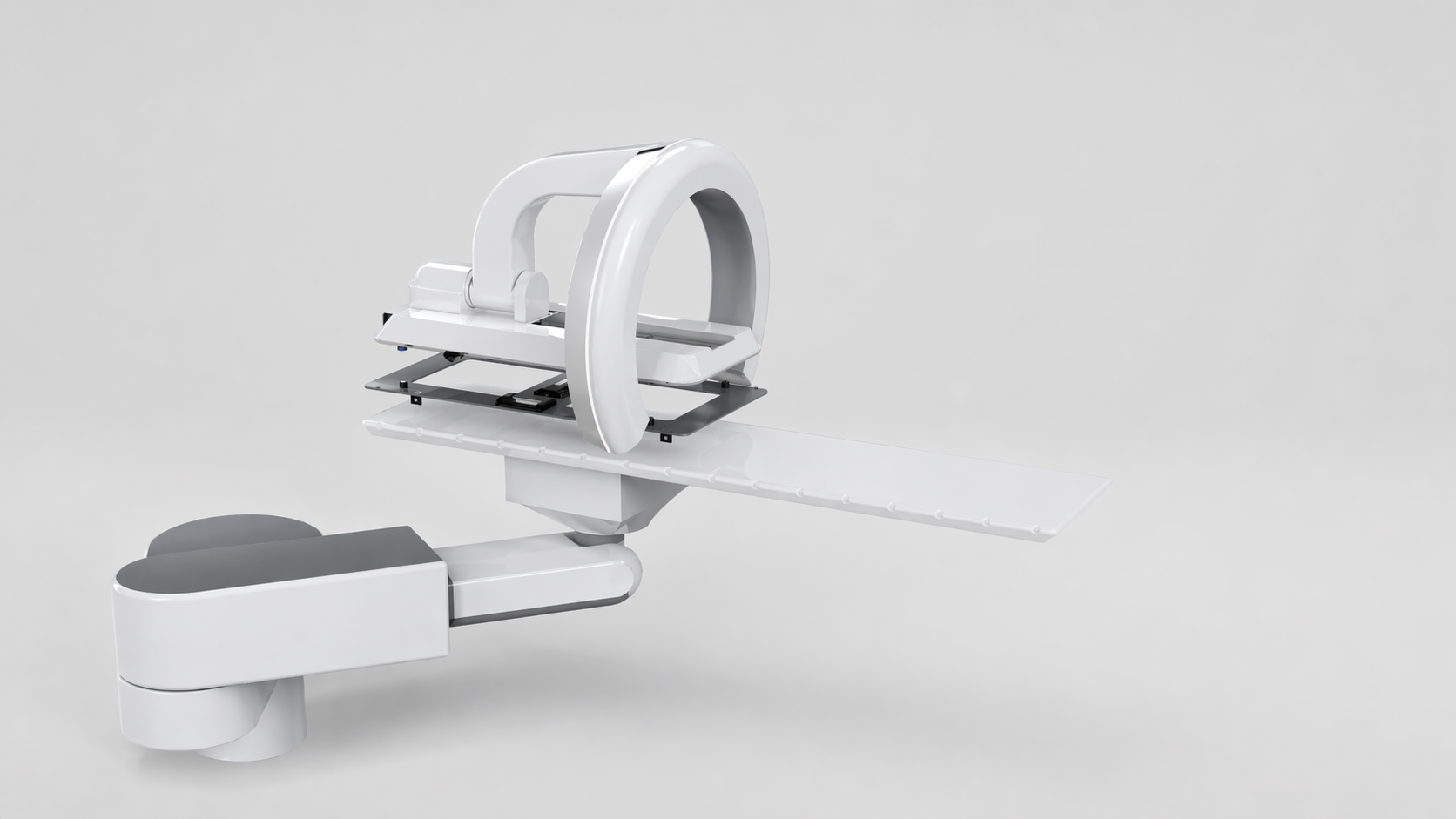
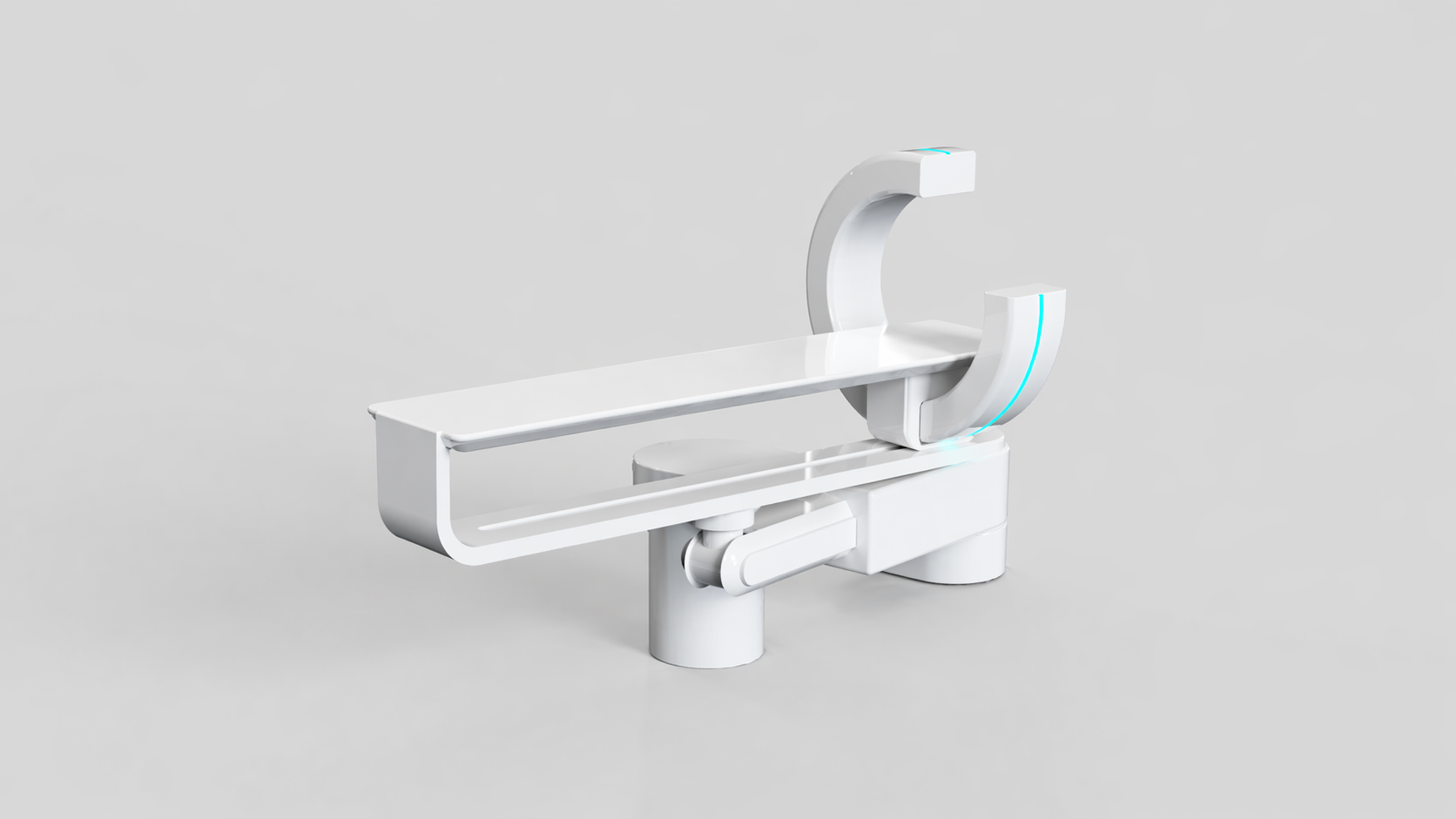
Through collaborations with leading institutions such as CERN, Karolinska Institute, and Skandion Clinic, Terapet has rapidly evolved from early-stage innovation to a product-driven MedTech company. The development of Qualyscan® marked a key milestone, introducing a new approach to activity-based verification in particle therapy.
Today, Terapet operates at the intersection of nuclear imaging, particle therapy, and theranostics, working with hospitals, research centres, and industry partners worldwide to enable a shift from planned treatments to verified, data-driven care.
Key milestones
CERN spin-off founded in Geneva
Award-winning startup recognised in multiple Swiss innovation competitions, including Swiss Bic of CERN Technologies, Venture Kick Stage I, II and III, FIT, FIF, Top 10 Life Science Venture Leaders by Venturelab, Top 10 in Swiss Innovation Challenge, Top 10 Rising Star MedTech, and Top 100 Swiss Startups in 2021, 2022, 2023 and 2024.
Seed round of CHF 3 M
Early financial traction through equity, awards and grants, supporting the transition from research-based innovation toward structured product development.
Building scientific and clinical partnerships
Partnerships with CERN, Karolinska Institute and Skandion Clinic, supported by Innosuisse and the European Commission.
Launch of Qualyscan®
Launch of Qualyscan® at PTCOG and completion of Series A of CHF 9 M, including equity, awards and grants.
Pre-clinical testing at Yonsei Cancer Center
Expansion of validation activities with pre-clinical testing in heavy ion therapy at Yonsei Cancer Center.
ISO 13485 certification
Strengthening of the quality and regulatory framework for clinical deployment.
TheraVivo project
TheraVivo project with RaySearch, Skandion Clinic and Uppsala University, focused on in vivo verification and adaptive particle therapy.
Vision & Mission
Vision
To enable a new standard of precision medicine where diagnosis, treatment, and verification are seamlessly connected and every decision is driven by direct, measurable insight.
Mission
High-performance PET imaging
Deliver high-performance PET imaging for nuclear medicine and particle therapy.
In vivo treatment verification
Enable in vivo verification of radiation treatments through direct, measurable clinical insight.
Adaptive, data-driven therapy
Support the transition toward adaptive, data-driven therapy by connecting planning, delivery, and verification.
Scalable next-generation imaging
Expand access to next-generation imaging through scalable and cost-efficient solutions.
Clinical workflow integration
Our technologies are designed to integrate into clinical workflows while providing actionable information that improves treatment accuracy, accelerates drug development, and enhances patient outcomes.
Our team
Founders
Leadership Team
Board Members
Dr. Christina Vallgren, MBA
PhD in Applied Physics (Chalmers University of Technology, Sweden/CERN). MSc in Applied Physics and Nuclear Engineering (Chalmers University of Technology, Sweden). MBA (Blekinge Institute of Technology, Sweden). PMP (Project Management Professional). Staff Physicist at CERN 12+ years. Before coming to CERN, Christina earned an MSc degree in nuclear physics from Chalmers University of Technology, Sweden and did her master thesis in evaluation and study of control rods performance in various nuclear power plants. The work was carried out at Westinghouse, Sweden and KKL, nuclear power plant in Leibstadt, Switzerland. In 2008 she joined CERN for a PhD in applied physics and has worked there for the last 12 years (Summer Student 2007 -> PhD 2008-2011 -> Senior Research Fellow 2011-2014 -> Staff Physicist 2014-2019). Christina was the main responsible for the LHC (Large Hadron Collider, 27 km, the world’s biggest accelerator) Beam Vacuum (the world’s biggest vacuum system) Operation and has also been the supervisor for five master students and two fellows. She is also a scientific journal referee for IEEE Transactions on Nuclear Science. In 2021, Christina was nominated and awarded by the CERN Directors for the remarkable career trajectory from physics at CERN to medical/entrepreneurial fields. This was the first time CERN awarded their alumni for the impact they made after the career at CERN.
Dr. Marcus Palm
PhD in Applied Physics (Vienna University of Technology/CERN), MAS in Translational Medicine and Biomedical Entrepreneurship (University of Bern), and MSc in Applied Physics and Electrical Engineering (Linköping University). Detector Physicist at CERN for 13 years with expertise in hadron therapy system design and commissioning, CE certification of medical devices, high-performance detector development, detection technologies, and data analysis. Marcus joined CERN in 2006, working on advanced detector technologies for a novel neutrino factory. He completed his PhD at MedAustron/CERN (2008–2011), translating clinical dose quality requirements into hardware specifications across the full beam delivery chain from accelerator to patient. He then worked at MedAustron as Systems Engineer, leading architecture and validation of patient safety systems and contributing to CE certification of the full facility as a single medical device. Before founding Terapet, he was responsible for two light-based detectors in the CERN Large Hadron Collider. His recently gained MAS degree strengthened competencies in quality and regulatory affairs for medical devices and IVDs, including QMS/GMP, regulatory strategy, clinical performance, IP, and biomedical commercialization, supporting his quality and regulatory leadership at Terapet.
Prof. Dr. Raymond Miralbell
Medical director at Centro de Protonterapia of Quirónsalud, Madrid, Spain, since 2019. Chairman of Servei de Radiooncologia at Institut Oncològic Teknon of Quironsalud, Barcelona, Spain. Chairman and Associated Professor of the Radiation Oncology Division, at the University Hospitals of Geneva (Switzerland) 2006-2019. Chairman of the Swiss Proton Users Group 2000 – 2008. Radiation oncologist trained from 1979 through 1989 in the University of Barcelona and the University of Harvard. Main research domain: Prostate cancer, breast cancer, proton therapy. – Imaging for radiotherapy treatment planning – Treatment precision optimization through image guided radiotherapy – Tracing of the biochemical relapse after curative surgery or radiotherapy – Prognostic value of hypoxic markers (pathological and imaging) – Quality of life studies in fragile patients on androgen deprivation – Biological modeling of prostate cancer response to irradiation and fractionation sensitivity. – Biological modeling for salvage radiotherapy after post-irradiation local failure – Stereo-tactic beam radiotherapy for prostate, gynecologic, ocular/orbital, and oligometastatic tumors.
Herve Duffour
Dr. Vanessa La Rosa
Vanessa joined TERAPET in February, 2025. She holds a PhD in Medical Physics & Bioengineering (University College London, UK), MSc in Communication Engineering (Politecnico di Torino, Italy). During her PhD, she focused her research activity on real-time range verification in ocular proton treatments. Before joining TERAPET, Vanessa held the position of Marketing & Business Development Manager at DETECTOR Devices & Technologies Torino, where she was responsible for executing comprehensive marketing initiatives, promoting brand vision through international engagements and leveraging market insights to drive R&D;, sales strategies, and product positioning. Vanessa brings a versatile skill set that includes both technical and business-related expertise, with a proven track record in fostering global expansion and key partnerships with clinical particle therapy centers and industry leaders.
Dr. Ben Brunt
Dr. Michael Betz
Joined Terapet in April, 2021. PhD in Electrical Engineering (Karlsruhe Institute of Technology, Germany / CERN), MSc in Electrical Engineering (Hochschule Karlsruhe, Germany). Before joining Terapet, Michael held a RF Electronics Engineer position at Lawrence Berkeley Labs (LBL) in US for the last five years. At LBL, Michael worked on design, development and troubleshooting of instrumentation and control systems in the ALS (Advanced Light Source) accelerator complex. Prior to that, Michael did his master thesis, his PhD thesis and the postdoctoral fellowship at CERN during 2009-2016.
Cathal Harte
Joined Terapet in September 2024. ME in Computer and Electronic Engineering at UCD (University College Dublin). Before joining Terapet, Cathal held a lead system and software engineer position at the Swiss research center .NeuroRestore, developing neuroprosthetic medical devices for use in clinical trials. These neuroprosthetics have helped people with paraplegia and tetraplegia to regain lost mobility, and one such device, the Brain-Spine Interface, enabled a man with tetraplegia to use his thoughts to control his legs and walk again. Prior to that, Cathal worked in the Irish/Swiss start-up Rapt Touch as a firmware engineer, collaborating with HiteVision to bring new interactive whiteboards with improved writing experience to the Chinese education market.
Prof. Dr. Rolf Lewensohn
Dr. Mark Pleško, MBA
Dr. Mark Plesko, MBA, born 1961, is a world-renowned expert in nuclear accelerators and particle cancer therapy. He is the founder and managing director of Cosylab, which he has grown to 300 employees over three continents. He is President of the Management Board of the J. Stefan Institute and member of the EU-Japan Business Round Table. Dr. Plesko previously served for six years as President of the Engineering Academy of Slovenia and three years as President of the board of Fotona Inc. He was vice-president of the Slovenian Science and Technology Council and member of Programme Councils for two faculties at the University of Ljubljana. He is an angel investor in 15+ startups and sits on the board of several start-ups and investment funds. He received the Award of the European Physics Society 2001, was nominated for Slovenian Entrepreneur of 2014, received the Award of the Slovenian Chamber of Commerce for exceptional business and entrepreneurial achievements 2018, and received the IEDC Alumni of the Year Award in 2018.
Giovanni Leo
Our Awards